Garden Clearance in Purley
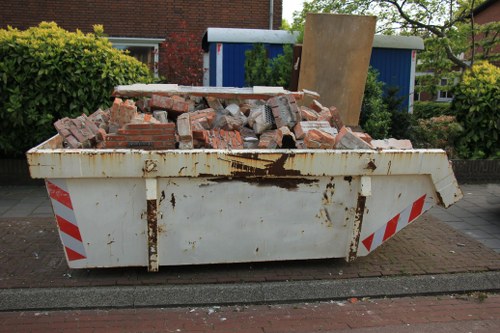
Garden clearance in Purley should leave outdoor space easier to use, easier to maintain and ready for whatever comes next, whether that is new planting, a tidy-up before a property sale or the removal of accumulated waste after a long season. We provide a practical clearance service that focuses on garden waste, bulky outdoor items and general tidy-up work carried out with care. The aim is straightforward: remove what is no longer wanted, sort the load sensibly and leave the space in a cleaner condition.
Our work can cover brash, cuttings, soil in manageable quantities, old plant containers, broken outdoor furniture and other items commonly found in overgrown or neglected gardens. We also handle mixed loads where organic waste and non-organic items need separating. If you need a broader service, you can compare it with our garden clearance page, or look at related options such as waste removal when the job includes more general rubbish as well as garden material.
For properties in and around Purley, a good clearance visit usually starts with a clear view of what needs removing and what should stay. That helps us plan the labour, access and disposal method sensibly. If you are gathering information before you decide, a short list of items, a few photos and any access notes are often enough to begin. Tell us what you want cleared, and we can talk through the most suitable way to approach it.
What our garden clearance service covers
Garden clearance is more than taking away a few bags of clippings. It often involves moving through beds, paths, side returns, sheds and corners where clutter has gathered over time. We remove loose green waste, dead plants, hedge cuttings, old timber, plant pots, garden ornaments no longer wanted and mixed debris that would be awkward to shift in ordinary household waste. Where items are heavy or awkward, the work is done with practical lifting and loading methods rather than leaving you to separate everything in advance.
In many jobs, the useful result is not just a pile taken away, but a layout that makes the garden feel usable again. That might mean clearing around a patio, opening access to a gate, stripping back an overgrown border or making a rear yard easier to keep under control. When a space has been neglected, we can work in stages and remove the material in a way that suits the load size and the site conditions. Our recycling and sustainability approach explains how recoverable materials are handled where suitable facilities are available.
Some customers want a simple one-off tidy; others need a fuller clearance after landscaping, pruning or tenancy changeover. The service can therefore be scaled to the level of waste present, with attention paid to what is reusable, what is recyclable and what should be disposed of as mixed refuse. If you are comparing service types, home clearance may be relevant when the job also includes indoor possessions, while flat clearance is more suitable for enclosed residential spaces with different access considerations.
Outdoor waste, bulky items and awkward access
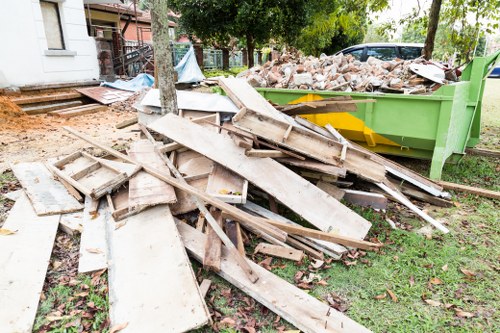
Gardens often contain a mixture of waste streams, and that mixture is one reason a dedicated clearance service is useful. We can collect branches, hedge cuttings, leaves, weeds, turf offcuts, old fencing components, damaged sheds parts, compost bags, broken planters and other outdoor items that are no longer needed. Where there is a mix of materials, we handle the lifting, sorting and loading so that the work can move ahead without turning into a long do-it-yourself job.
Access is another important part of the service. Some outdoor spaces are reached through a house, a side passage, a narrow gate or a shared path. That does not automatically prevent clearance, but it can affect how the job is managed and what vehicle loading is appropriate. If the work includes items from a garage, lean-to or outside store, it may help to compare the task with garage clearance or, where the load is dominated by larger household pieces, furniture clearance as well.
We also deal with lighter but bulky outdoor objects that are inconvenient to take apart or transport in a car, such as broken garden chairs, parasols, small tables, old play equipment and worn storage items. A clear description of the main materials helps us understand how much labour is likely to be needed and whether the clearance is straightforward or more involved. Mixed outdoor waste is common, so a sensible plan often saves time on the day and reduces disruption around the property.
How we approach a typical clearance job
The process is designed to be practical rather than complicated. Once the job details are agreed, the clearance itself is carried out by removing the agreed materials, loading them safely and leaving the cleared area neat and manageable. If the site contains items that should remain in place, those boundaries are respected. This is especially important in planted gardens where shrubs, edging, paving or decorative features need to be preserved during the work.
- Identify the items or areas to be cleared.
- Separate anything that must remain on site.
- Allow access through gates, paths or side entrances where needed.
- Agree any special handling for heavy, damp or awkward material.
- Request a quotation based on the actual volume and type of load.
For larger outdoor projects, the material can be judged alongside other household or property clearance requirements. That is useful when a garden is being cleared at the same time as a loft, garage or entire home. Our loft clearance page is relevant if stored belongings also need attention, while house clearance is a better fit for full-property work that includes multiple rooms and outbuildings.
When a garden clearance is most useful

People usually arrange garden clearance when the outdoor space has reached a point where routine tidying is no longer enough. That might follow a long spell of growth, a move out, the end of a tenancy, a partial landscaping project or simple accumulation over time. In those situations, the service helps restore order quickly and removes the pressure of dealing with a large volume of waste in several separate trips. It is also helpful when weather has damaged stored items or left debris scattered across the plot.
Some clearances are mainly about making the area usable again. Others prepare the ground for further work, such as a new lawn, patio update or planting scheme. If renovation debris is mixed in with garden waste, our builders waste clearance page may be more relevant for the heavier construction materials, while furniture disposal is useful for damaged outdoor seating or interior items being removed at the same time.
There are also occasions when a smaller amount of waste still warrants a dedicated visit because the items are difficult to carry, too many for a standard car boot or awkward to sort through alone. In those cases, the value of the service lies in handling the labour properly and keeping the job organised. A clear quote is easier to provide when the contents, quantity and access conditions are described accurately from the start.
Pricing factors and quotation details
Garden clearance pricing is usually influenced by volume, the mix of materials, how easy it is to reach the waste and whether the job involves light tidying or heavier loading. Dense green waste and bulky objects take different levels of labour, and a load that looks modest from one angle may prove more involved once it is gathered together. For that reason, the most useful quotations are based on a realistic description of the items rather than a broad estimate alone.
For a smooth enquiry, it helps to note whether the waste is already bagged, whether it is loose, and whether any pieces need dismantling before removal. If you have photographs, they can support the quotation process, especially when the load is spread across several parts of the garden. If your requirements involve a broader property tidy-up, our pricing and quotes page is a practical place to review how estimates are handled, and business waste removal is available when the work forms part of a commercial premises clean-up.
We do not expect you to measure every item precisely, but useful detail does lead to a more accurate quote. If there are access constraints, uneven ground, locked gates or shared entrances, mention them early so the job can be planned sensibly. Clear information usually means a clearer quotation, with fewer surprises on the day and less back-and-forth before the work can be booked.
Garden areas we can help clear
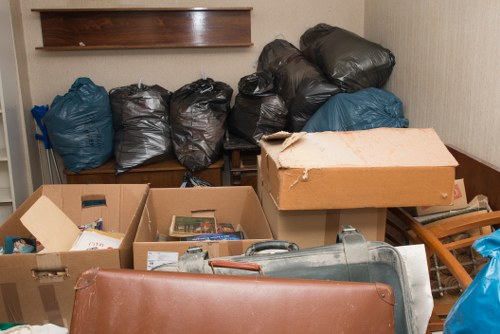
Different parts of a garden create different clearance needs. Borders can collect prunings and weeds, lawns can hold wind-blown debris, patios can gather old pots and broken accessories, and storage areas can fill with redundant tools or packaging. We work across these spaces in a measured way, removing what is agreed while leaving the remaining features intact. That can include front gardens, rear gardens, side returns, courtyards and enclosed yards, depending on the layout of the property.
Where the job involves items from a shed, detached store or outbuilding, it may be useful to think of it as a mixed domestic clearance rather than a simple green-waste collection. Our furniture clearance page can be relevant if the outbuilding contains tables, chairs or shelving, and office clearance may be helpful for small business premises with outdoor storage or redundant equipment mixed into the work.
Some gardens also contain items that are weathered, contaminated by damp or partly broken down. Those loads need a little more care when lifting and loading, particularly if they are mixed with soil, leaves or timber. In those cases, the main decision is usually whether the whole pile should be taken as one job or divided into separate sections. We can help you think that through, then arrange the removal in a way that keeps the process organised and efficient.
About Purley
Purley is a district in the London Borough of Croydon, in south London, shaped by its position on the higher ground along the North Downs escarpment. The area grew significantly after the arrival of the railway in the nineteenth century, when improved transport links encouraged residential development and a shift from rural edges to suburban streets. Even today, the landscape still shows that transition, with a mix of earlier settlement patterns, later housing and traces of open land at the edges. The name is commonly associated with the main corridor around Brighton Road, but the wider district also includes quieter residential streets and locally distinct pockets such as parts of Riddlesdown and Coulsdon borders.
One of Purley’s best-known features is its variety of green space and elevated views. Riddlesdown Common lies nearby and forms part of the chalk downland landscape that characterises this side of south London, while smaller parks and open spaces add to the area’s suburban character. The locality also has a strong transport identity: Purley railway station remains an important interchange, and the surrounding roads connect the district to central Croydon, the A23 corridor and routes further south. Architecturally, Purley is notable for a blend of interwar housing, later infill, commercial frontages and buildings that reflect the district’s period of suburban expansion. Together, these elements give the area a practical, lived-in character rather than a single uniform centre.
Purley also has a long-standing relationship with community facilities, schools, churches and local shopping parades, which help anchor everyday life across the district. The combination of residential streets, open common land and transport links means the area feels both connected and relatively spacious compared with more densely built parts of inner London. Its local identity is shaped less by one dominant landmark than by the way roads, rail, housing and greenspace sit together across the ridge and its surrounding slopes. That balance of built and open environment is one of the defining features of Purley as a place.
Further clearance options for larger jobs
Some customers begin with the garden and then realise there is more to deal with than outdoor waste alone. If the job extends into rooms, storage areas or whole floors, a broader clearance plan is often more efficient than splitting it into several separate visits. We can help with that kind of joined-up work when it is appropriate, and related pages such as home clearance or flat clearance may provide a better match for the residential side of the task.
For properties with a lot of mixed refuse, the question is often whether the waste should be handled as garden material, household clutter or a combination of both. That distinction matters because it affects lifting, sorting and disposal arrangements. Waste removal is the broader option when you need a general clearance solution, while garden clearance remains the right choice when the main challenge is outside space and the waste is mostly organic or garden-related.
If you are unsure which page or service best matches your job, the simplest approach is to describe the load and the layout. That lets the enquiry be matched to the right type of clearance without unnecessary complexity. One well-described job is usually easier to price and manage than several vague requests sent separately, especially when access, waste type and scope all need to be considered together.
Preparing a useful quotation request
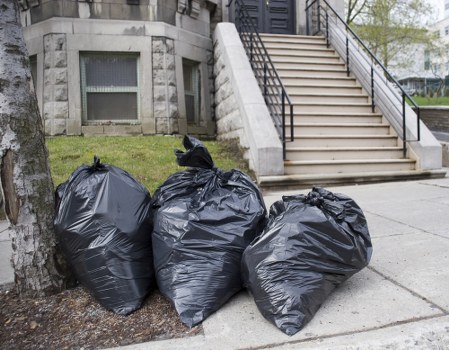
A good quotation request does not need to be long, but it should cover the practical points that affect the work. The most useful details are what needs removing, roughly how much there is, where it is located and whether anything should be left alone. If the job includes a side return, rear gate, shared access or a flight of steps, that is worth mentioning because it helps plan the clearance properly. If you have one or two pictures, they can also make the scale of the job easier to understand.
It is also sensible to mention whether the waste is dry, wet, loose, bagged or partly dismantled. Those details help with labour planning and can make a noticeable difference to the quote. When the job is part of a larger property project, say so at the outset; related services such as about us can help you understand our wider company information, while contact us is the best next step when you are ready to request a quotation.
Whether your clearance is a single overgrown border, a full garden tidy or a mixed load from several outside areas, the goal is to give you a clear, workable plan for removing it. If you want to move forward, ask for a quotation today and share the basic details of the job so we can respond with the most appropriate next step.